
By Andrew B. Mbewe and Nicholas S. Adam
Infectious disease modelling plays a vital role in protecting public health, helping researchers predict outbreaks, evaluate interventions, and inform evidence-based policy. In this spirit, the Centre for Epidemiological and Mathematical Research (CEMAR) recently concluded its 2025 Infectious Disease Modelling (IDM) Online Training, a five-day intensive workshop that brought together researchers from across Africa to build the theoretical foundations and hands-on skills needed to address some of today’s most pressing health challenges.
With 92 participants from 19 African countries completing the endline survey, we proudly celebrate the impact of this diverse and dynamic cohort, reflect on the lessons learned, and look ahead with optimism to the transformative work they will lead in shaping the future of public health across the continent.
1. High Impact and Participant Satisfaction
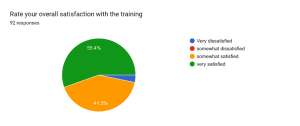
The feedback from participants was overwhelmingly positive, with an impressive 96% reporting that they were satisfied or very satisfied with the training. This is an encouraging testament to the programme’s quality, relevance and impact.
More importantly, the training achieved its core goal: capacity building.
- 92% agreed or strongly agreed that their understanding of infectious disease modelling improved.
- 92% feel confident applying these concepts to their own work or research.
As one participant shared, “I truly appreciate the effort the team put into making complex concepts accessible and practical. I can’t wait to integrate these new modelling skills into my research work!”
2. A Strong Balance of Theory and Practice
The curriculum was thoughtfully designed to bridge the gap between abstract concepts and real-world application.
- Theoretical Sessions: These covered foundations of disease dynamics, heterogeneity, model parameterization and fitting, and stochastic models, with 86% of participants reporting that the sessions met or exceeded their learning needs.
- Practical Sessions: Focused on hands-on coding and model fitting. These sessions were equally impactful, with 84% of participants indicating that they met or exceeded expectations.
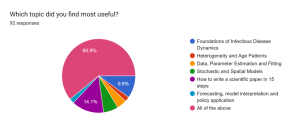
Interestingly, when asked which session was most useful, the majority of participants (56 respondents) enthusiastically chose “All of the above,” a testament to the curriculum’s cohesion and the meaningful impact of every session.
3. The “R” Revolution: A Strong Appetite for Technical Skills
One of the clearest takeaways from the feedback was the participants’ eagerness to deepen their technical coding skills. While the practical sessions were highly rated, many participants expressed a desire for more time dedicated to R programming fundamentals before progressing to complex modelling.
- Feedback: “The R practical needs to be introduced before going straight into practice.”
- Actionable Insight: Future iterations of the training will likely offer an “Introduction to R” as a pre-training module or extend the session duration to ensure that all participants, regardless of their coding experience, can follow along comfortably.
4. Listening to the Network: Future Improvements
We asked, and participants shared their thoughts. While the daily schedule was manageable for most, 51% felt that the five day total duration was too short to fully absorb all the material.
Suggestions we are taking to heart include:
- Extending the training to 10 days or 2 weeks to allow for deeper exploration of the material.
- Physical Training: Many participants expressed a strong desire for face-to-face interaction to address connectivity challenges and enhance networking opportunities (currently, only 23% reported making meaningful new connections).
- Advanced Topics: Participants requests for more content on Machine Learning, AI in modelling, and climate-sensitive diseases.
5. Bridging the Gap: From Models to Policy
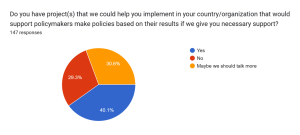
One of CEMAR’s ultimate goals is to see modelling results translated into tangible public health policies. Towards the end of the training, we asked participants if they had projects that could support policymakers if given the necessary support, and the potential for meaningful impact is clear.
- 6% of participants said a definitive “Yes.”
- 9% responded “Maybe we should talk more.”
This means that over 70% of the cohort sees an opportunity to turn their new skills into actionable evidence for decision-makers. It also signals that the need for mentorship and technical support doesn’t end with the training, it’s just the beginning. We are actively exploring ways to partner with these alumni to ensure their models have a real impact on the communities that need them most.
Closing Thoughts
The energy and enthusiasm from this cohort have been nothing short of inspiring. From beginners who called the training “eye-opening” to seasoned researchers who found the scientific writing session invaluable, the diversity, passion, and commitment of our participants truly shine, and it is this collective strength that will drive the future of infectious disease modelling across Africa.
To our participants: Thank you for your passion, perseverance, and candid feedback throughout this journey. You are not just participants, you are trailblazers, shaping the future of infectious disease control and public health across Africa. Your work will make a real difference.
Stay tuned for updates on our next cohort, we are listening, evolving, and ready to make an even greater impact!


This was a super wonderful training. The participants had some great takeaways. Let’s refine as per suggested inputs for coming trainings🔥🔥🔥🔥🔥🔥🔥🔥
Well-done for the good work Nicholas and the team, this is truly amazing
Thank you Nicholas and Andrew for sharing this feedback. The training was very helpful and indeed these training will help improve modeling skills in the African continent.
Expecting more of these engagement in the coming new year